Objective
To improve access to education for rural community members children and right to education.
Our Approach
Many children around the world remain disadvantaged in their school experiences either through inadequate teaching materials, lack of sanitation facilities, and lack of food, discrimination, harassment and even violence. These conditions are not conducive to learning or development, and no child should have to experience them.
For young girls, education is both an intrinsic right and a critical lever to reaching other development objectives. Providing girls with an education helps break the cycle of poverty; educated women are less likely to marry early and against their will, less likely to die in childbirth, more likely to have healthy babies, and are more likely to send their children to school. When all children have access to a quality education rooted in human rights and gender equality, it creates a ripple effect of opportunity that influences generations to come.
Access to formal education in Kenya has proved to be a challenge as more than 1.2 million primary-school-age children does not attend school (UNICEF, 2020).
Part of the challenge is the inclusion of children with special needs or disabilities and the lack of data that makes it impossible to quantify the extent of the problem. The factors that keep children with disabilities out of school are found both in the home environment and in the education system.
Children from nomadic communities face more challenges including a perceived lack of value of schooling for pastoral societies and the long distance to schools in some areas. Meanwhile, providing state education for children in the informal settlements around large cities such as Nairobi, Mombasa, Kisumu and Garissa is problematic since the government does not recognize settlements (UNICEF, 2020). This opens the way to low-cost private schools that may not meet national quality standards.
In north-eastern Kenya, students and staff have been directly affected by acts of violence including terrorist attacks on schools. This has led to teachers from other regions of the country refusing to work in these areas because of safety fears, meaning that children, adolescents and youths in already marginalized north-eastern counties are further deprived of education. In addition, severe droughts lead to school closures, lower attendance particularly in pastoral communities and reduction in water supply and school feeding.
Refugee children in Dadaab and Kakuma also struggle with empty classrooms and insufficient teachers as well as a prohibition on entering the workforce that reduces the incentive to study.
Our education program is geared towards addressing the high rate of dropouts for school going children in our target communities such as the rural communities. Recognizing the disparities in education for boys and girls in rural agro-pastoral communities, we work to sensitize locals on the value of education and benefits of educating girls, raise awareness on the harmful effects of cultural practices such Female Genital Mutilation (FGM), and distribute sanitary towels to combat absenteeism and transition.
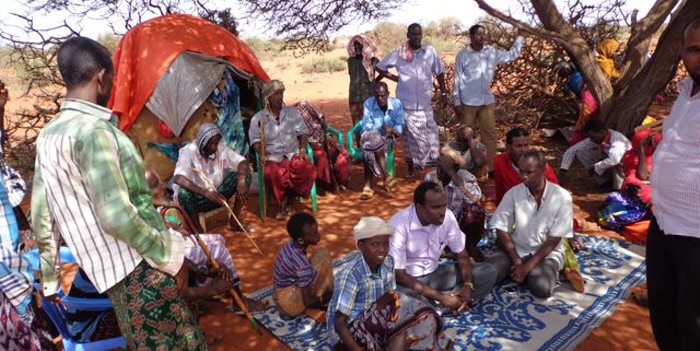
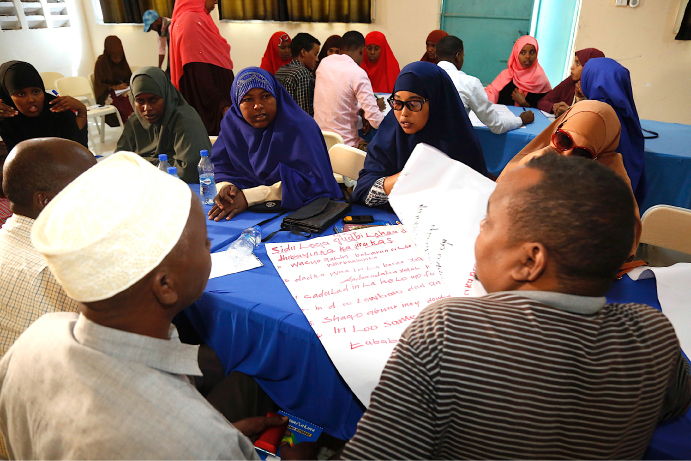
Aid-Afrika therefore dedicated on facilitating 6 sessions of rural community awareness on the value of education for all children of school-going age in the rural villages in Garissa County.
CHECKOUT OUR OTHER PROGRAMS
Peace Building & Security
Food Security & Livelihood
Protection & GBV
Good Governance, Democracy & Human Rights
OUR PARTNERS / DONORS