
CONFLICT RESOLUTION THROUGH COMMUNITY DIALOGUE
THE PROBLEM
The story is about conflict resolution through community dialogues and the role women play in taking part of community decisions.
The incident happened on 17th January 2021, One person was killed and several people injured following violence between two communities in Tana River county. Several houses were burnt down at the outskirts of Madogo trading centre in Tana sub county in land skirmishes between Orma and Munyoyaya pastoral communities. Reports indicated that 10 other people were injured and taken to Garissa General hospital for treatment.
Initially, there were different stories emerging from the region as to the cause of the clashes. As narrated by Ms Rukia who was one of our targeted participants during the project interventions, she said that It was later found out by clan elders and villagers that the root cause of the violence emanated from a land issue that happened at a place called Kuruso, some few kilometres outskirts of Madogo Town. The main instigators were land brokers especially from the Munyoyaya people who wanted to sell pieces of land to outside bidders. The Orma clan who claimed ownership saying they inhabited the area also contested the land in question.
In a brief background of the two communities, the Munyoyaya people are renowned to be sedentary farmers and live alongside river Tana while the Orma are nomadic pastoralists.
The conflict turned quickly into violence with many houses being burnt into ashes most notably Ali Wario’s house, an MP from Garsen, Tana River County. There was quick response by security personnel who dispersed the youth and did security patrols to maintain calmness and order.
Being a volatile place, local community leaders scrabbled to respond to the violence through meetings and finding ways to resolve the conflict.
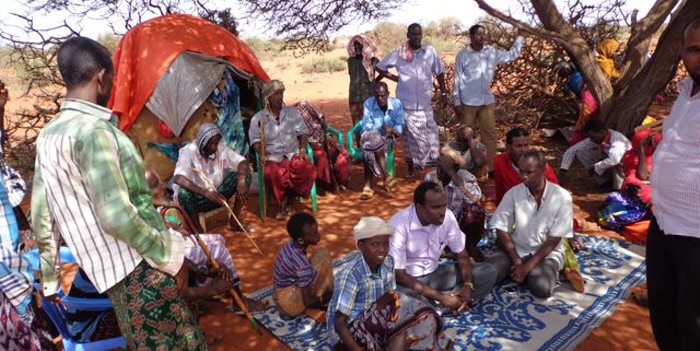
Clan elders from the two communities, security personnel and village elders all around Madogo were engaged in a series of meetings that aimed at addressing the conflict. The meetings were then taken public where an inclusive gathering between the two conflicting parties, including wider residents of Madogo was held for two consecutive days. The aim of it was to address the issue and find a common ground in which both parties will agree to stop the conflict and also discuss the general security issue of the region.
Both parties agreed to the following: contain their youth to stop escalating tensions, No land should be sold in the disputed area for the next six months as investigations and verifications on the ownership of the land continues. Settling in the disputed lands is prohibited and the communities will hand over individuals who create tensions or involved in violence to the security officials.
One of the agreements was to form a local task force that will go round the villages, preach peace, and warn the communities of the perils of conflicts, citing historical incidents. This idea was initiated by Ms Rukia who was part of Aid-Afrika’s project interventions and also member of Madogo peace committee. The idea was supported by Tana River peace committee chairman.
The task force headed by the peace committee chairman and supported by local leaders and community structures has so far achieved in targeting 4 villages. The violence has so far calmed with normal life resuming in the area. Although no definite solution was reached to address the land issue so far, the conflict is currently under management. Aid-Afrika is also keeping close tabs and monitoring the situation.
THE INITIATIVE
The incident happened abruptly with no prior indication of violence. The conflict led to the death of one person and destruction of property. However the incident was contained very fast without any further escalations.
Ms Rukia who championed for the awareness creation in the villages is now a community gate keeper and has also formed ties with leading security officers such as Madogo OCS. Her brilliant idea has elevated the position of women in the male dominated region with other women getting inspired and coming out to take an active participatory role in building peace at the region. Ms Rukia informed Aid-Afrika that she established a 3-person committee made of women that preaches peace and empowers women in Madogo. She said that the group’s has since increased to 11 women.
THE IMPACT
Historically, the region is known for its deadly ethnic clashes that occur from the slightest provocations. The quick and swift response by the community leaders and the security personnel in containing the conflict has highlighted the importance of the following approaches in conflict resolution
The use of community dialogues in conflict resolution- Initiated by the local community leaders, the dialogues helped in de-escalating tensions by reaching agreements that are satisfactory to the conflicting parties
The security officials in abstaining from the use of excessive force in suppressing demonstrations goes a long way in de-escalating tensions and protecting human lives.
Creation of awareness campaigns in the rural or interior areas to mobilise local knowledge that can be important in peace-building efforts.
QUOTES
Aidid Hussein a Somali businessman at Madogo said the following “ I am happy that the ‘wazee’’, elders, were able to contain the conflict. Madogo is a growing town with now different ethnicities inhabiting it.
Security risks are a threat to the development of the town and also to small business people. Therefore I hope we can have peace, live and do business with each other peacefully”
Salado, member of Rukia’s peace initiative said the following “peace starts with the individual, then the family, relatives then community. I have learnt a lot from Rukia whom we have been neighbours for many years and she has inspired me to do something for my community before I die” questioning her on what she has done so far, she stated. “ I have started teaching my kids the importance of peace and the dangers of bad compant and the influence of drugs. I have allowed my eldest daughter to accompany Rukiya in workshop events to learn and be part of her awareness creation campaign in the villages. So far I have appreciated what she has done for me”